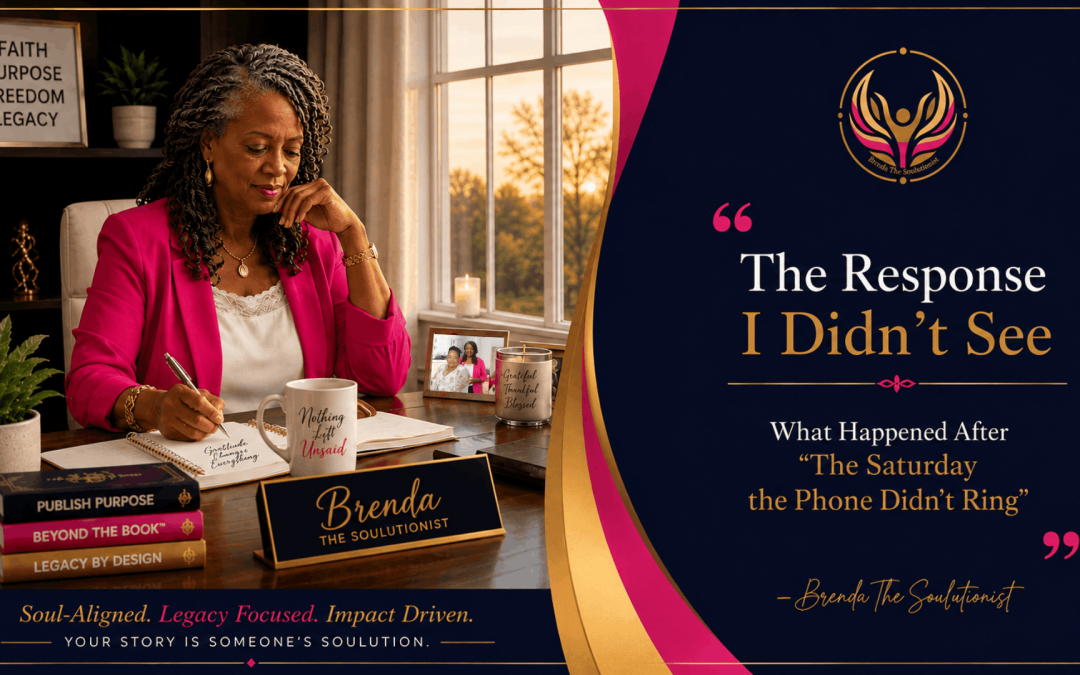
I wrote that story to honor my Pop Pop, acknowledge the role he played in my life, and give myself room to grieve. It was personal. I wasn’t trying to teach anybody anything. I just needed to share what was on my heart.
When I published it, I checked the post a few days later.
Three likes. No comments.
I’ll be honest. I noticed.
It’s not that I believe likes decide what matters. It’s just that sometimes, in a world full of numbers, it’s easy to wonder if anyone is really listening.
Then the messages started coming.
The Conversation Happened Somewhere Else
People began reaching out privately. One woman told me the story reminded her to give herself a little grace. Another said she needed to call someone important while she still could. Someone else realized she hadn’t really given herself permission to grieve.
Then I received a message from an entrepreneur that made me stop and read it again.
“I felt your story; thank you for being the lifeline I did not know I needed.”
A lifeline.
I sat for a moment and let those words sink in. When I looked back at the post, I still saw three likes and no comments. But she saw something else entirely.
And that’s when I started thinking about how often we confuse visibility with impact.
What Happens When Your Story Doesn’t Get the Response You Expected?
We’re so used to seeing immediate feedback these days. Likes, comments, and shares are easy to count, so it can be tempting to believe that if we don’t see a response, nothing happened.
But what if something did happen?
What if the woman who needed your words read them quietly and kept scrolling? What if she thought about them later that evening? What if she picked up the phone, gave herself some grace, or finally allowed herself to grieve?
We may never know.
And I think that’s okay.
Maybe I needed that message as much as she needed the story. It reminded me not to confuse what I can see with what is really happening.
Why I Write
It reminded me why I do what I do.
I don’t write because I need a certain number of people to respond. I write because sometimes there’s something on my heart that needs a place to go. Sometimes it starts a conversation. Maybe it helps someone see things differently. Other times it just lets someone know she isn’t the only one feeling what she’s feeling.
And sometimes, apparently, it becomes a lifeline.
I didn’t know that when I wrote the story. I couldn’t have known. I just told the truth about where I was.
Your Story May Be Bigger Than You Think
Over the years, I’ve spent a lot of time encouraging women to tell their stories. I’ve seen women hesitate because they wonder if their story is important enough. Maybe someone else has already said it. It’s possible no one will care. Worst case is no one will want to read it.
I understand that.
Sometimes our own experiences feel ordinary just because we lived them. But what feels ordinary to you might be exactly what someone else needs.
I’ve learned we don’t have to know who needs our story before we share it. We just have to be willing to tell the truth about what we’ve lived, what we’ve learned, and what we’re still learning.
You just don’t know who is listening.
What Pop Pop Taught Me About Saying What Matters
Pop Pop taught me a lot about relationships, consistency, love, and showing up. For years, our Saturday conversations were just part of my life. I didn’t know then how much those ordinary moments of heartfelt talks would mean to me later.
During one of our last conversations, we both knew there would come a day when the phone would not ring. That conversation stayed with me. It became the beginning of Nothing Left Unsaid, a life-choice promise I made to myself: if I love someone, I’ll tell them. If someone has made a difference in my life, they’ll know it.
His absence taught me something else. Life is too precious to keep waiting for the perfect moment to say what matters most.
And lately, I’ve been wondering if our stories are the same way.
We keep thinking there will be another time. Another opportunity. Another book. Another post. Another conversation.
But we don’t know that.
Maybe that’s why this response to my story has stayed with me. It reminded me that telling the story is part of the same promise. Say what matters while people can still hear it.
Can Your Story Matter Even If You Don’t See the Impact?
I think it can.
Maybe that’s what happened with my blog. I told my story because I needed to honor my Pop Pop and make sense of what I was feeling. Someone else read it and found a little room to breathe.
That’s the beautiful thing about stories. Once we share them, they don’t just belong to us anymore. Someone else might find courage in them. Someone might find words for something she couldn’t explain. Someone might simply feel a little less alone.
Not because everyone will hear it.
Because someone just might.
And you may never know who that someone is.
Why This Matters to Me
This is also why my work with Talk To Me Publishing matters so much to me. I don’t just want to help people put words between two covers. I want to help purpose-driven women see the value in the stories they’ve lived and understand what can happen when they have the courage to share them.
Because your story might become someone else’s Soulution.
You may never know who needed your words. And maybe we don’t have to.
Maybe our job is simply to tell the story honestly and leave room for it to find the person who needs it.
Before We Leave This Conversation
If you’ve been sitting on a story, maybe think about it a little differently. Don’t worry about whether everyone will care. Think about the one woman who might.
Maybe it’s the woman sitting at her kitchen table, trying to figure something out. Maybe it’s the one awake at two in the morning, wondering if anyone else has ever felt the way she feels. Maybe it’s the entrepreneur who needs permission to give herself some grace. Maybe it’s the daughter who needs to make the call, or the woman who needs permission to grieve.
You may never know that your words reached her.
But that doesn’t mean they didn’t matter.
Tell the story. Let it find its way.
Because your story matters. Your voice matters. And somewhere, somehow, your voice could become someone else’s Soulution.
What happened afterward reminded me that our stories can travel farther than we can see.
That blog didn’t generate much public engagement. But it started conversations. Real ones. Quiet ones. Important ones.
And honestly, I’ll take those conversations any day.
Because when I look back on my life, I don’t want to measure it by how many people clicked a button. I want to know that something I said made someone stop, think, feel, reach out, heal, or maybe simply know she wasn’t alone.
That’s the kind of legacy I want to leave.
And that’s why I’ll keep telling my stories and encouraging others to do the same, while I continue to live with Nothing Left Unsaid.
The Soulutionist Reflection
Sometimes we never get to see where our words land. That doesn’t mean they didn’t matter.
Maybe that’s the part I needed to remember.
Not every meaningful response is public. Not every impact can be measured.
Some conversations happen quietly.
And sometimes, that’s enough.
With gratitude,
Brenda The Soulutionist
The Soulutionist Journal™
Real conversations for women building profitable businesses, meaningful legacies, and lives they don’t need a vacation from.
What My Pop Pop Taught Me About Living with Nothing Left Unsaid
When grief collided with entrepreneurship, I discovered that success isn’t measured by how much we accomplish. It’s measured by whether we’re building a life that honors our faith, our health, our relationships, and our purpose. This is the story of my Pop Pop, the promise of Nothing Left Unsaid, and the legacy that changed how I define success and why I believe your story is someone’s soulution.
The Saturday Tradition
For nearly three years due to pandemic losses, every Saturday began with a conversation between Pop Pop and me. Sometimes he called first. Sometimes I did. Those conversations became part of the rhythm of my life, and I never imagined how much they would one day mean to me.
Looking back, I realize Pop Pop wasn’t just checking in. He was quietly preparing me for life. I didn’t know it then, but those ordinary Saturday conversations would become the foundation for one of the greatest lessons I’ve ever learned.
Who Was My Pop Pop?
Pop Pop had a way of making people feel seen. He listened without rushing, encouraged without judging, and always left me believing life wasn’t quite as complicated as it seemed. That’s why I called him my voice of reason.
I had the blessing of sharing sixty-three years with him, and I never questioned whether I was loved. He showed up for the moments that mattered, and his quiet consistency taught me more than any speech ever could.
We Assume There Will Always Be Another Saturday
In May of 2025, doctors told our family Pop Pop had about three weeks to live. During one of our final Saturday conversations, we acknowledged that one day the phone wouldn’t ring. It wasn’t an easy conversation, but it was an honest one.
After we hung up, I made a promise to myself. If I love someone, I’ll tell them. If someone has made a difference in my life, they’ll know it. That promise became my philosophy: Nothing Left Unsaid.
When Business Doesn’t Grieve
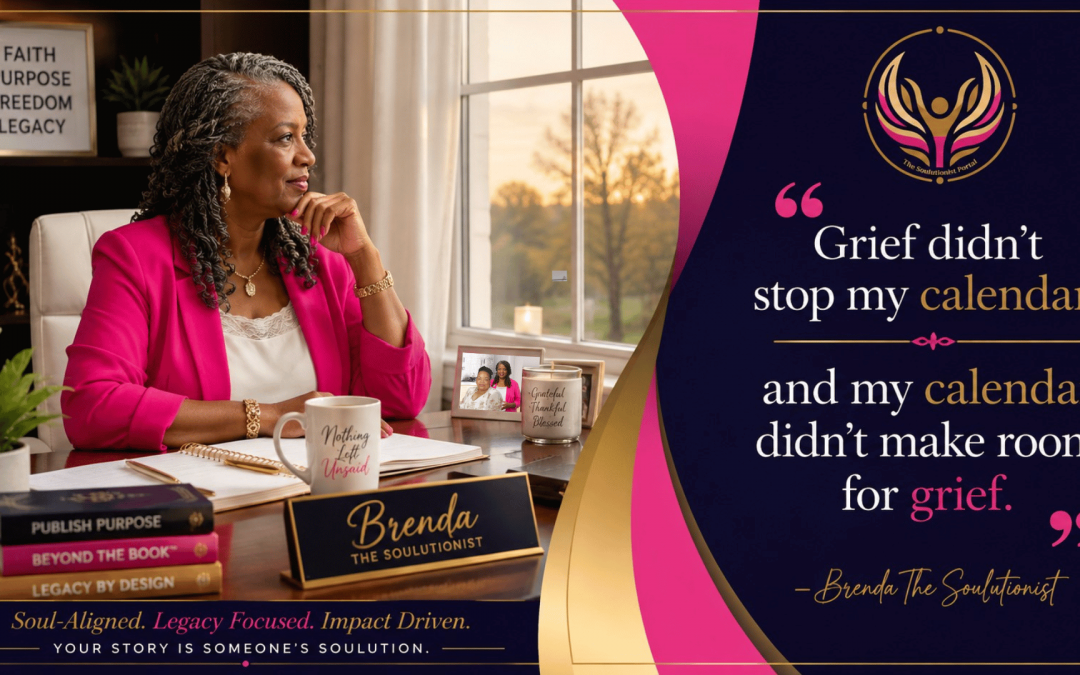
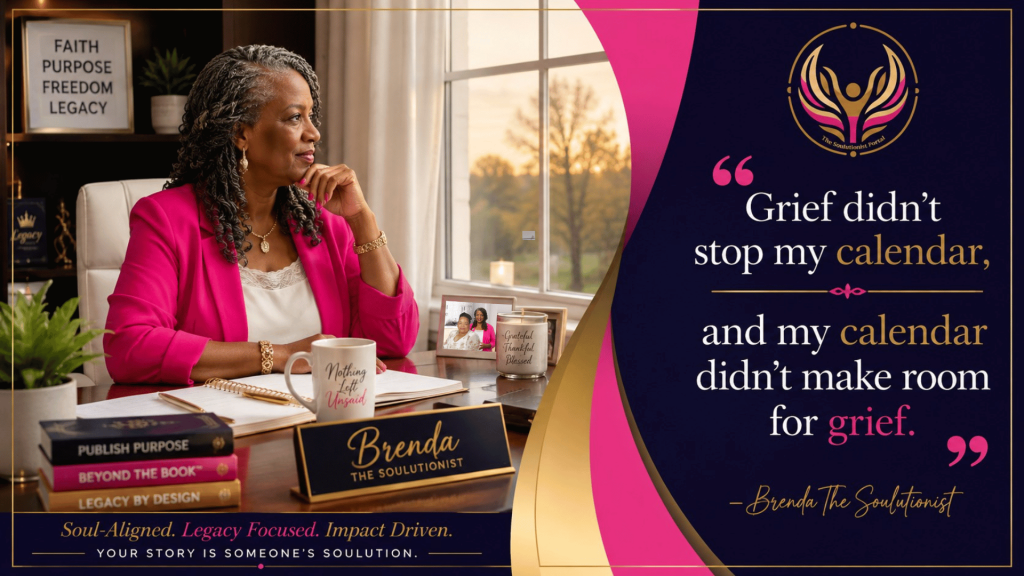
June brought one loss after another. Friends and family members passed away, and by July, I said goodbye to Pop Pop. Through it all, life kept asking me to show up, even when my heart wasn’t ready. My clients still needed edits, meetings, links, answers, and deadlines met. Grief didn’t stop my calendar, and my calendar didn’t make room for grief.
The first Saturday after Pop Pop passed away, the phone didn’t ring. That’s when I realized I had been taking care of everyone else’s needs while quietly ignoring my own heart. I wasn’t just tired. I was grieving, and I had never given myself permission to acknowledge it.
The Success I Thought I Wanted
Saying goodbye to Pop Pop changed how I define success. I used to measure it by completed projects, published books, and crossed-off to-do lists. Those things still matter, but they no longer tell the whole story.
Today, I believe success is measured by something much deeper. Am I protecting my health? Am I making time for the people I love? Am I building a business that supports my life instead of consuming it? Those questions matter just as much as any business goal.
The Freedom I Want for Every Woman
Several years ago, I made a decision to live more intentionally. I became debt-free except for my mortgage, stopped making emotional money decisions, and built a business that allows me to take every other month away from client work. I don’t work weekends because I’ve learned that rest isn’t something we earn after everything is finished. It’s part of a healthy life.
That’s the freedom I want for every woman. I want her to build a profitable business without sacrificing her health, her family, her faith, or her peace. Success should create freedom, not captivity.
Why Stories Matter
I’ve loved stories since I was a little girl because stories help us feel less alone. They remind us that someone else has walked a similar road and found hope on the other side.
That’s why Talk To Me Publishing and my Beyond The Book™ process is so important to me. We don’t simply help people publish books. We help purpose-driven leaders transform their stories into books, and their books into businesses that create impact, income, and lasting legacy. I’ve learned that when someone has the courage to share their story, it often becomes someone else’s Soulution. More importantly, your legacy begins the moment you share your story
Before We Leave This Conversation
As I think about Pop Pop, I realize the greatest gift he left me wasn’t advice. It was the way he lived. He showed me that relationships deserve our time, encouragement should never be delayed, and love should always be spoken while people can still hear it.
If someone came to mind while you were reading this, don’t wait. Make the call. Send the text. Write the note. Tomorrow is a gift, not a guarantee.
Until Next Time
Every Saturday reminds me that life is precious and relationships are worth protecting. Pop Pop may no longer be on the other end of the phone, but his voice still guides the way I choose to live. That’s why I choose to live with Nothing Left Unsaid.
My hope is that you’ll do the same.
The Soulutionist Reflection
Every story teaches us something. My hope is that today’s reflection encourages you to live intentionally, choose wisely, and leave Nothing Left Unsaid.
With gratitude,
Brenda The Soulutionist
The Soulutionist Journal™
Real conversations for women building profitable businesses, meaningful legacies, and lives they don’t need a vacation from.
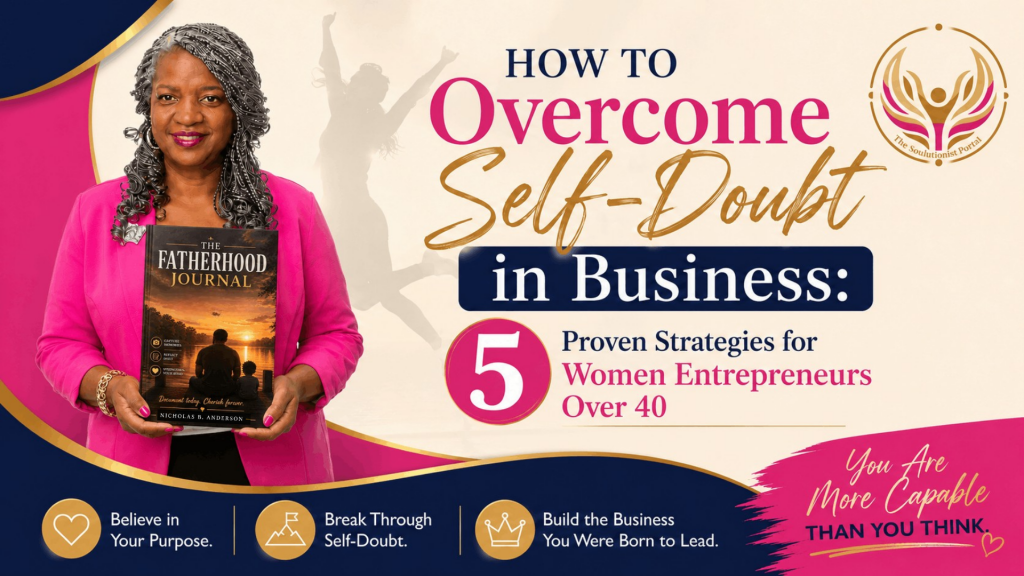
How to Overcome Self-Doubt in Business: 5 Proven Strategies for Women Entrepreneurs Over 40
Self-doubt affects even the most accomplished women entrepreneurs. By recognizing the signs, challenging limiting beliefs, and taking intentional action, you can replace fear with confidence and continue building a business that reflects your purpose. While this article is written for women entrepreneurs over 40, these principles can empower anyone ready to lead with greater confidence.
Have You Ever Wondered If You’re Really Ready?
Have you ever finished a successful project, celebrated the win, and then immediately questioned whether you could do it again?
If so, you’re not alone.
Recently, I made one of the biggest pivots of my career by focusing on building my Self-Publishing Partnership Empire. I had the privilege of helping Nicholas B. Anderson publish and market The Fatherhood Journal through Talk To Me Publishing using my Beyond The Book With Brenda™ framework. The launch was successful. The feedback was encouraging. By every measure, the project was a win. I should have been celebrating what God had done through the project. Instead, I found myself questioning whether I could ever do it again.
Yet before I moved on to my next project, a familiar voice whispered, “What if that was just luck?”
As a retired Marine Gunnery Sergeant, I know what it means to lead under pressure. Even so, I discovered that self-doubt doesn’t disappear simply because you’ve accumulated experience. Sometimes it shows up right before your next level of growth.
Quick Diagnosis
If you’ve recently thought:
• I’m not qualified enough.
• Someone else could do this better.
• What if I fail?
• Maybe I’m not ready.
You may be experiencing business self-doubt. It is common, but it does not have to control your future.
Why Do Successful Women Entrepreneurs Experience Self-Doubt?
When I recently read the Forbes Coaches Council article, “The Silent Struggle of Women in Business: How to Break Free From Self-Doubt and Lead With Power,” I found myself nodding in agreement. The article highlights a reality many women know all too well: self-doubt doesn’t disappear simply because we’ve achieved success. In fact, it often becomes louder just before our next season of growth.
I saw myself in those words because I experienced them firsthand after helping Nicholas B. Anderson publish and successfully launch The Fatherhood Journal. The project exceeded expectations, and by every measure, it was a success. Yet instead of fully celebrating the impact, my inner critic quietly asked, “Can you really do it again?”
Maybe you’ve heard that same voice. It doesn’t matter how many accomplishments are behind you. Self-doubt has a way of convincing us that yesterday’s success was an exception instead of evidence of what we’re capable of.
Research confirms just how common this experience is. According to KPMG’s 2020 Women’s Leadership Summit Report, 75% of executive women reported experiencing imposter syndrome at some point in their careers. Success doesn’t eliminate self-doubt. It simply changes the questions we ask ourselves.
The encouraging news is that confidence isn’t built by waiting for fear to disappear. It grows every time we choose to trust our experience, embrace our purpose, and take the next faithful step forward.
Soulution #1: Reflect Before You React
When doubt appears, pause instead of believing every thought. Ask yourself whether your fear is based on facts or feelings. Curiosity is often the first step toward confidence.
Soulution #2: Replace Self-Criticism with Self-Compassion
You will make mistakes. That does not make you a failure. Speak to yourself the way you would encourage a friend who is pursuing a meaningful dream.
Soulution #3: Challenge Doubt with Evidence
Create two columns. Take out a sheet of paper or your favorite digital device and create two columns. On one side, write every doubt that’s keeping you stuck. On the other, write the facts. List the clients you’ve served, the goals you’ve reached, the challenges you’ve overcome, and the lives you’ve impacted. Facts have a remarkable way of quieting fear when you give them a voice.
Soulution #4: Write Your Letter of Triumph
Write a letter reminding yourself of obstacles you’ve already overcome. Read it before major presentations, launches, or difficult conversations.
Soulution #5: Build a Confidence File
Save testimonials, thank-you notes, emails, and messages from clients. When your inner critic becomes loud, revisit the lives you’ve already impacted.
Confidence Checkup
Pause for a quiet moment and honestly answer these questions:
Am I making decisions from fear or faith?
Am I allowing yesterday’s success to prepare me for tomorrow’s opportunity?
What dream have I postponed because I questioned my abilities?
What would I do today if I fully trusted the gifts God has given me?
Diagnostic Review
After reviewing the evidence, the diagnosis is clear.
Your self-doubt is not the problem. Believing it is.
Every challenge you’ve overcome...
Every client you’ve served…
Every lesson you’ve learned…
Every success you’ve celebrated…
Has been preparing you for this next season.
Don’t let fear convince you that experience doesn’t matter.
It does.
Confidence Prescription
Prescription #1: Write down three accomplishments you’re proud of.
Prescription #2: Replace one limiting belief with three facts that prove it wrong.
Prescription #3: Take one courageous action within the next 24 hours. Confidence grows every time you move forward.
Brenda’s Soulution
Your next level isn’t waiting on more talent.
It’s waiting on the moment you stop letting self-doubt speak louder than your purpose.
Trust the woman God has been preparing all along.
~ Brenda The Soulutionist
Today’s Soulution
Today, grab a notebook or your favorite digital device and answer one question: ‘What would I attempt if I fully believed I was capable?’ Then choose one small step and take it before the day ends. Small acts of courage become the foundation of extraordinary businesses.
Your future isn’t waiting for a more confident version of you. It’s waiting for the courageous woman you already are. Today is a great day to make the shift.
Soulutionist Sources:
KPMG. Advancing the Future of Women in Business: 2020 Women’s Leadership Summit Report.
Forbes Coaches Council. “The Silent Struggle of Women in Business: How to Break Free From Self-Doubt and Lead With Power.”
Identity Shift NOW: Why Women Entrepreneurs Over 40 Must Become Her Before They Become Successful
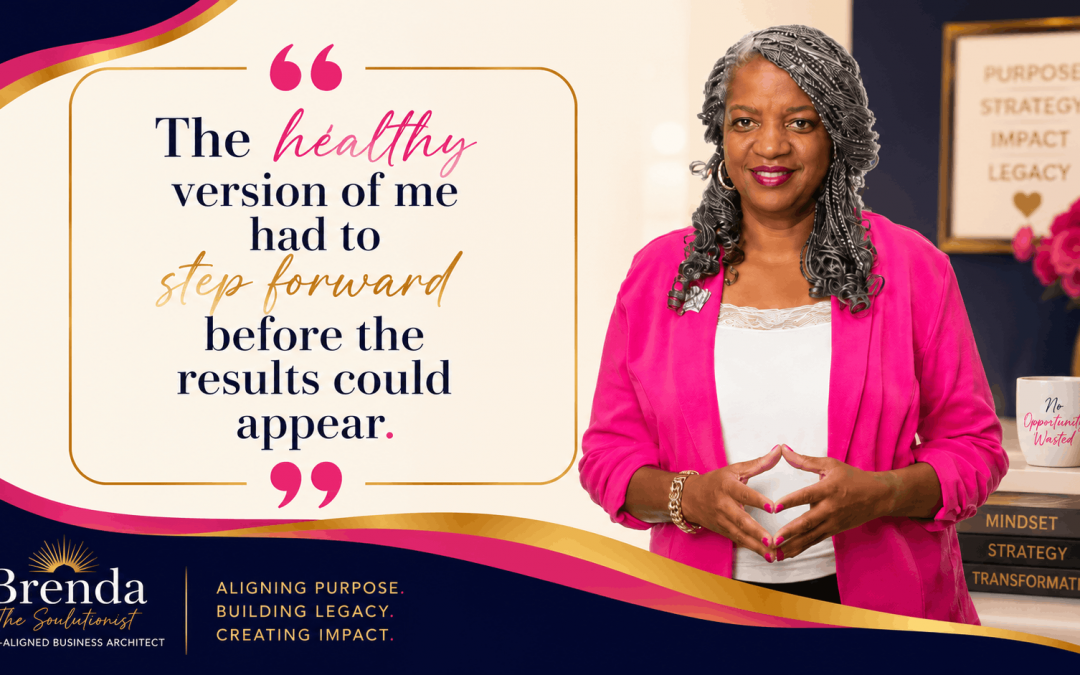
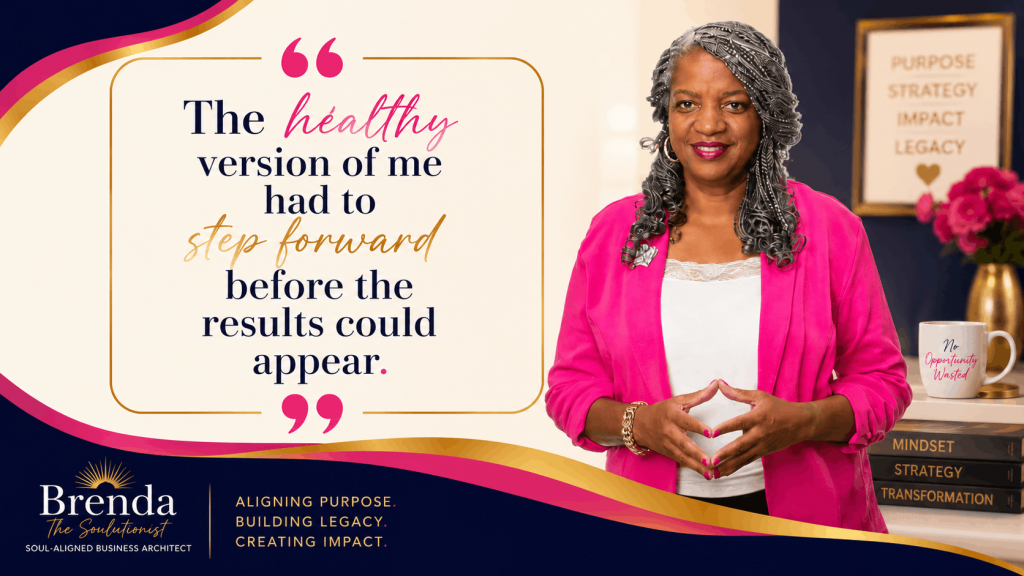
At 63, I realized that sustainable health required me to stop viewing myself as someone trying to lose weight and begin seeing myself as a healthy woman making healthy decisions every day.
That one discovery changed everything.
It was never really about weight.
It was about identity.
And that realization changed both my health and my business.
Why Lasting Transformation Begins with Identity
My No Opportunity Wasted (NOW) mantra was not being fully practiced in my health journey. Like many women entrepreneurs over 40, I focused on goals. Lose the pounds. Eat better. Exercise more. Stay motivated. The problem was not the goals. The problem was trying to create new behaviors while still seeing myself as the same person.
What Is Identity-Based Change?
Identity-based change happens when we stop asking what we want to achieve and begin asking who we need to become. Goals focus on outcomes. Identity focuses on the person creating those outcomes. Many women entrepreneurs over 40 are building businesses, raising families, supporting communities, and solving problems while carrying outdated beliefs about themselves.
My Health Journey at 63
This time, my weight loss journey had to be different. I could not approach it as punishment. I would not rely on willpower alone. It was time to begin seeing myself as a healthy woman making healthy choices. Healthy people drink water, move their bodies, and make decisions that support their future selves. Once I accepted that identity, my decisions became less forced and more natural.
Why Identity Matters More Than Motivation
As Christine Carter explains in “How Our Identity Shapes Our Behavior: The Power of Self-Concept,” people often act in ways that reinforce the beliefs they hold about themselves. That insight helped me understand why my approach to health had to change at 63. The challenge was not motivation. The challenge was identity. When we change what we believe about ourselves, our actions begin to align with that new identity.
How Do You Change Your Identity?
Identity changes one decision at a time. Every healthy meal, every walk, every boundary, every courageous conversation, and every completed project becomes evidence of the woman you are becoming. Small actions cast votes for your future identity.
What Is the Connection Between Health and Business for Women Entrepreneurs Over 40?
The same lesson I learned through my health journey applies directly to business. Many women want more confidence, more income, more visibility, and better systems. Yet beneath those goals are beliefs that say they are behind, overwhelmed, or not worthy of success. The woman who builds a thriving business values her health, protects her time, honors her gifts, and makes decisions based on her future rather than her fears.
Who Is the Woman You Are Becoming?
One of the most powerful questions you can ask yourself is: Who is the woman I am becoming? What does she believe? How does she care for her body? How does she manage her business? The answers become your roadmap.
Allow Your Actions to Match Your Identity
Transformation happens when our actions become natural expressions of our beliefs. I no longer say I am trying to be healthy. I say I am a healthy woman making healthy choices. I no longer ask if I can build the life I want. I ask how the woman I am becoming would handle the situation.
Your Next Step
Step into your NOW season. If there is a dream you still carry, a business you want to grow, a healthier body you want to build, or a life you want to experience, begin with identity. Do not focus only on the goal. Focus on becoming the person who naturally creates the result. Perhaps the real transformation is finally becoming the woman you were always meant to be. Be Blessed.
Last month, a health setback forced me to stop and take a hard look at something I thought was running just fine: my business.
What I discovered surprised me.
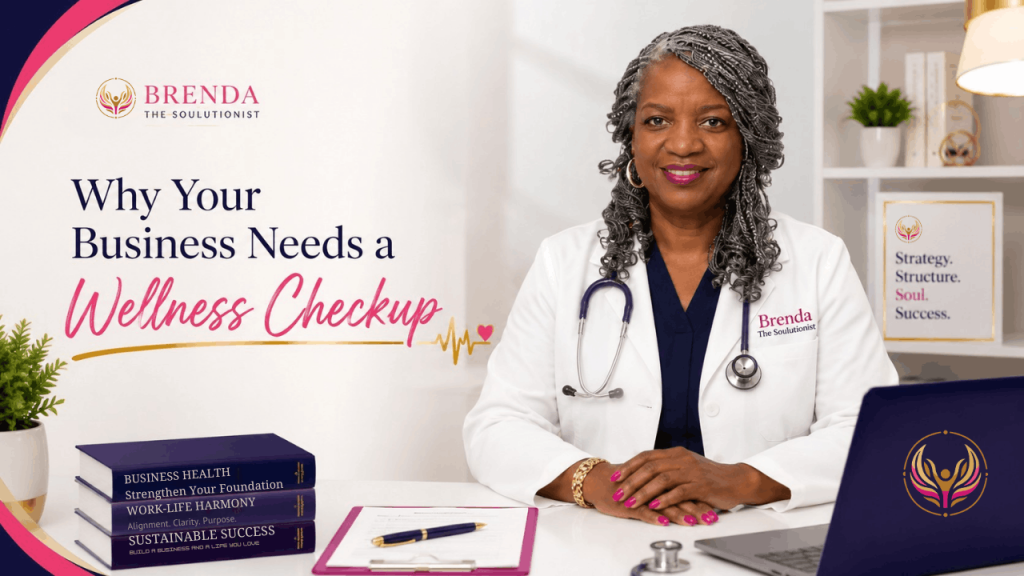
Just like our bodies need regular checkups, our businesses do too.
As women entrepreneurs over 40, we often pride ourselves on being the ones who keep everything moving. We manage clients, families, schedules, finances, and the countless responsibilities that come with running a business. We tell ourselves we’ll rest after the next project, the next launch, or the next big goal.
I know because I recently found myself facing a medical setback that forced me to pause and reevaluate not only my health but also the way I was running my business.
That experience reminded me of something important: if we schedule regular checkups for our bodies, shouldn’t we do the same for our businesses?
What Is a Business Wellness Checkup?
A business wellness checkup is a simple yet intentional review of your business’s health. It helps you identify what’s working, what’s not, and where you may be operating on autopilot.
Just like a doctor checks your blood pressure, heart rate, and overall health, a business wellness checkup examines your goals, systems, finances, marketing efforts, and daily operations.
The goal is not perfection. The goal is awareness.
Why Every Business Needs a Wellness Checkup
Many entrepreneurs believe success requires constant hustle. Unfortunately, that mindset often comes at a cost.
According to the World Health Organization, depression and anxiety contribute to an estimated 12 billion lost working days globally each year. While many people associate these challenges with large organizations, the impact can be even greater for entrepreneurs. When the business owner is exhausted, overwhelmed, or dealing with health concerns, every part of the business feels it.
Your business can only be as healthy as the person leading it.
When your energy is low, decision-making becomes harder. When you’re overwhelmed, important projects get delayed. When your health suffers, your business often feels the effects too.
1. Identify Business Problems Before They Become Bigger Issues
The first benefit of a business wellness checkup is identifying areas for improvement.
Sometimes we become so busy working in our businesses that we stop working on them.
Ask yourself:
Are my systems efficient?
Am I spending time on activities that generate results?
Are there tasks I should automate, delegate, or eliminate?
Is my customer experience still aligned with my mission?
Honest answers reveal opportunities for growth before small issues become major problems.
Small Problems Become Big Problems When Ignored
A missed process today can become a costly mistake tomorrow.
A neglected marketing plan can slowly reduce visibility.
An outdated service offering can make it harder to attract ideal clients.
Regular reviews help you spot warning signs early and make adjustments with confidence.
2. Reassess Your Business Goals and Priorities
The goals you set a year ago may not reflect the woman you are today.
Life changes. Businesses evolve. Priorities shift.
A wellness checkup gives you permission to pause and ask:
Do these goals still matter to me?
Does my business support the life I want to live?
Am I building success or simply staying busy?
Sometimes growth means adding something new. Other times it means letting something go.
Clarity comes when you give yourself space to evaluate where you’re headed.
If you’re struggling to find direction, I recently shared additional insights on gaining clarity and making intentional choices in business and life on my blog.
3. Improve Business Performance Without Burning Out
Many women entrepreneurs believe they need to do more to achieve better results.
Often, the opposite is true.
A wellness checkup can reveal ways to simplify operations, improve workflows, and focus on high-impact activities.
This may include:
Streamlining business processes
Improving project management
Updating technology tools
Refining marketing strategies
Creating healthier work boundaries
When your business runs more efficiently, you create room for creativity, growth, and peace of mind.
4. Create Work-Life Harmony as an Entrepreneur
One of the most valuable lessons from my recent health challenge was realizing that success means very little if you don’t have the health to enjoy it.
Work-life harmony is not about splitting your time perfectly. It is about aligning your business goals with your personal well-being.
Your body, mind, relationships, and business all deserve attention.
When one area suffers, the others eventually feel the impact.
Giving yourself permission to rest, recover, and recharge is not a weakness. It is a leadership strategy.
Your Wellness Is a Business Asset
As entrepreneurs, we often view ourselves as the engine that drives the business.
That is exactly why taking care of yourself matters.
Your energy fuels your ideas.
Your health supports your leadership.
Your well-being influences every decision you make.
When you invest in yourself, you are also investing in the future of your business.
Diagnostic Review
After reviewing the symptoms, the diagnosis is clear.
Many women entrepreneurs are carrying the weight of a growing business while neglecting the very person responsible for its success.
Sustainable success requires more than revenue goals and productivity systems. It requires intentional care for your health, your energy, your mindset, and your business.
When you care for both the entrepreneur and the enterprise, you create a foundation that can support long-term growth.
Your Prescription
Prescription #1: Gain Clarity
Set aside 30 uninterrupted minutes this week and answer:
What parts of my business energize me most?
What activities drain my energy?
What goals still align with the life I want to build?
Prescription #2: Simplify One Project
Choose one project that has been sitting unfinished. Break it into three small actions and complete the first action within the next 24 hours.
Prescription #3: Schedule Regular Checkups
Add a quarterly business wellness review to your calendar to evaluate your goals, systems, workload, and well-being before problems become crises.
Your health is your wealth.
The most successful businesses are built by entrepreneurs who understand that taking care of themselves is not a distraction from success. It is part of the strategy.
Schedule your wellness checkup. Listen to what it reveals. Then take the next step forward with confidence.