
by Brenda The Soulutionist | Apr 4, 2024 | Business
5 Steps To Creating Your Personal Development Plan for Success
As an entrepreneur, having a clear roadmap for your personal and professional growth is crucial. A Personal Development Plan (PDP) is a powerful tool that can help you bridge the gap between where you are now and where you want to be in the future in all areas of your life. By setting specific goals, identifying areas for improvement, and creating actionable steps, you can ensure that you are constantly evolving and moving closer to your dreams. In this article, we will outline the key steps you need to take to create your own PDP and start on the path to success.
The Steps
- Self-assessment: The first step in creating a PDP is to conduct a thorough self-assessment. Reflect on your strengths and weaknesses, as well as your values, passions, and long-term goals. Identify areas where you feel confident and areas where you need improvement. This process will help you clarify what aspects of yourself you want to focus on developing.
- Set SMART goals: Once you have completed your self-assessment, it’s time to set specific, measurable, achievable, relevant, and time-bound (SMART) goals. These goals should align with your overall vision for yourself and your business. For example, if one of your weaknesses is public speaking, a SMART goal could be to attend a public speaking course within the next six months and deliver a presentation at a networking event.
- Create an action plan: With your SMART goals in place, start by breaking them down into actionable steps. What tasks do you need to complete to achieve each goal? What resources or support do you need along the way? Creating an action plan will help you stay organized and focused on achieving your objectives.
- Implement regular reviews: Schedule progress reviews to ensure your PDP remains relevant and practical. Set aside time each month or quarter to reflect on what has worked well, your challenges, and any adjustments you need to make moving forward. These reviews will help keep you accountable and motivated to continue growing.
- Seek feedback and support: Finally, don’t be afraid to seek feedback from mentors, colleagues, or friends who can provide valuable insights into your development journey. Surround yourself with people who believe in your potential and are willing to support your entrepreneurial journey. Their perspectives can offer fresh ideas and encouragement when faced with obstacles.
Conclusion:
Creating a Personal Development Plan is essential for entrepreneurs looking to maximize their potential and achieve their wildest dreams. By following the five steps: conducting self-assessments, setting SMART goals, creating action plans, implementing regular reviews, and seeking feedback, you can take control of your growth journey like never before.
Remember that personal development is an ongoing process that requires dedication and commitment. Join The Soulutionist Portal to get help with your PDP. Invest in yourself, trust yourself, and believe in yourself from the moment you go! Your success story awaits!

by Brenda The Soulutionist | Apr 1, 2024 | Business
Change I Just Want To Scream
I wanted to scream when I logged on to find another update to a software, I use daily. I had just mastered the last change. As an entrepreneur I am sure you are no stranger to change. In fact, change often feels like the only constant in our entrepreneurial world. Change is inevitable, whether it is due to new software updates, shifts in market trends, or unexpected challenges. But instead of feeling overwhelmed or frustrated by these changes, we can learn to embrace them as opportunities for growth and innovation. This article will explore the power of embracing change and how it can help us thrive in an ever-evolving business landscape and keep me from throwing my computer across the room.
Shift your mindset
To embrace change you must first shift your mindset. Instead of viewing change as a disruption or obstacle, see it as a chance to learn and adapt. Remember every challenge presents an opportunity for growth and improvement. I am grateful I am a quick learner and despite the many changes I can adapt. By adopting a positive attitude towards change, you can approach new situations with confidence and resilience.
Stay informed
Plan to stay informed and proactive about upcoming changes. Keep yourself updated on industry trends, software updates, and emerging technologies that may impact your business operations. Attend workshops, seminars, and conferences to stay ahead of the curve. Being proactive will help you anticipate changes and prepare you to navigate them effectively and reduce stress.
Seek support
I called my friend Lisa just to vent and get support. Feel free to seek support from mentors, colleagues, or industry experts when facing significant changes. Surround yourself with a network of individuals who can offer guidance, advice, and encouragement during times of uncertainty. Collaboration and shared knowledge can help you navigate challenges more effectively and ensure you become unstoppable.
Protect your peace
As always, remember to take care of yourself and protect your peace regardless of all the changes happening around you. Writing and positive affirmations is one way I protect my peace. You can practice self-care routines such as meditation, exercise, or spending time with loved ones to maintain mental and physical well-being. Prioritize your health and psychological and physical well-being so that you can approach change from a place of strength and balance. Your overall health is your wealth and vital to living your best life.
Embrace the change
Finally, (I am preaching to myself here), embrace change as an opportunity for personal and professional growth. View each new experience as a chance to learn something new about yourself or your business. Embrace uncertainty as a catalyst for creativity and innovation. By embracing change wholeheartedly, you open yourself to endless possibilities for success and fulfillment.
Conclusion:
Writing is a safe place for me to express the ups and downs of my entrepreneurial journey and keeps my computers safe from destruction. Embracing change is not always easy, but it is essential for thriving in today’s ever-evolving business landscape. By shifting your mindset towards change as an opportunity for growth, staying informed and proactive about upcoming changes, seeking support from others when needed, practicing self-care routines that help you maintain your mental and physical health regularly, and viewing every new experience as a chance for personal development, you can position yourself for success during any challenge that comes your way! Remember that with every shift comes the potential for greatness. To get help embracing challenges, join The Soulutionist Portal, and you will never have to shy away from embracing change with open arms!

by Brenda The Soulutionist | Mar 19, 2024 | Business
Finding Your Mission: A Guide for Entrepreneurs
When starting as an entrepreneur, your mission will determine what and who you will serve and what products or services you will provide. A clear mission is essential for guiding our decisions, setting goals, and staying motivated. In this article, we will explore how to determine your mission as an entrepreneur so you can live your best life now!
What Drives You
The first step in determining your mission is to reflect on your values and beliefs. What drives you? What impact do you want to make in the world? Understanding what truly matters to you can ultimately shape your mission statement. Take time to journal or meditate on these questions and pay attention to any emerging common themes.
What Sets You Apart
Next, consider what sets you apart from others in your industry. What unique skills or experiences do you bring to the table? How can you leverage these strengths to make a difference? Your mission should align with your passions and talents, allowing you to stand out in a crowded marketplace.
What Is Your Long-Term Vision
Once you have identified your core values and unique strengths, it is time to define your long-term vision. Where do you see yourself and your business in five or ten years? What impact do you hope to have on your customers, employees, and community? Visualizing the future can help clarify your mission and inspire action.
Create Actionable Goals
After defining your vision, break it down into actionable goals. What specific steps can you take today to move closer to your mission? Set SMART (specific, measurable, achievable, relevant, time-bound) goals that align with your values and vision. By breaking down big ideas into manageable tasks, you can stay focused and motivated and begin closing the gaps between your desires and reality.
Be Flexible
Finally, remember that your mission is not set in stone. As you grow and evolve as an entrepreneur, your mission may also change. Be open to reassessing and refining your purpose as new opportunities arise or circumstances shift. By staying true to yourself and adapting as needed, you can continue living your best life now!
Conclusion:
Determining your mission as an entrepreneur is a powerful tool for success. By reflecting on your values, leveraging your strengths, defining a vision, setting goals, and staying flexible along the way, you can create a roadmap for achieving greatness in both business and life. So take the time to discover what truly matters to you and start living out your mission. Get information and join the Soulutionist Portal to get help building and living your mission.
by Brenda The Soulutionist | Mar 6, 2024 | Business
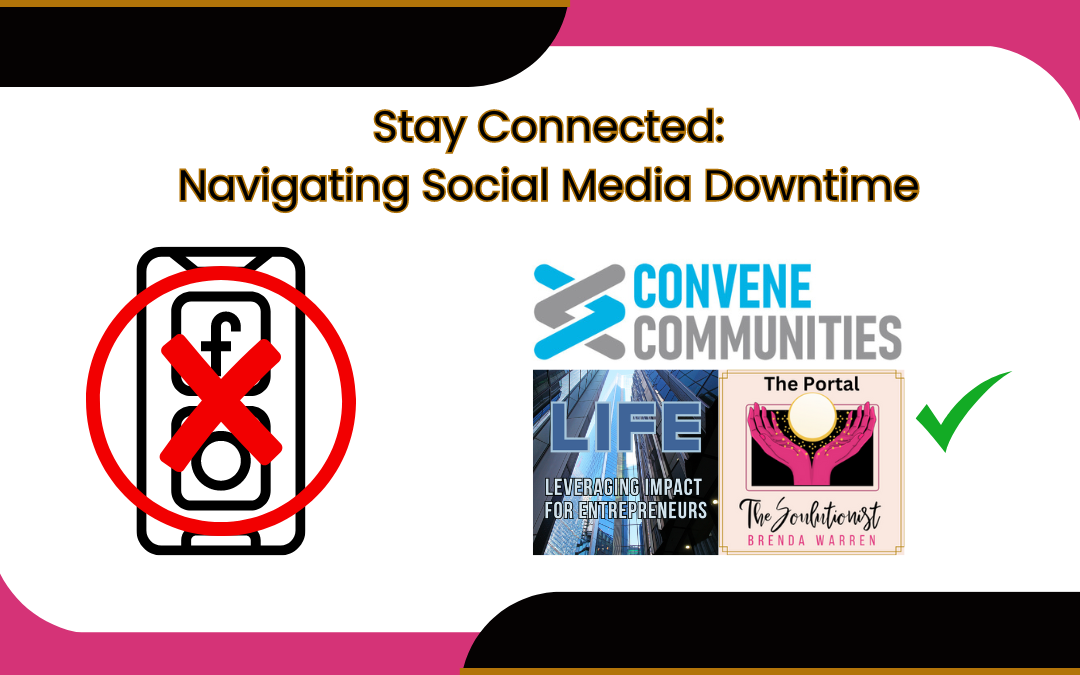
Stay Connected: Navigating Social Media Downtime
As entrepreneurs, we rely heavily on social media platforms like Facebook and Instagram to connect with our customers and tribe. But what happens when these platforms unexpectedly go down? It is crucial to have a contingency plan in place to ensure that you can stay connected during downtime. I used Convene Communities, What’s App, and Flodesk and stayed connected throughout the outage. This article will explore alternative ways to stay connected and engaged with your audience when social media is unavailable so you can stay connected.
Customer Access:
When Facebook and Instagram recently experienced major outages, many of us were left scrambling to find alternative ways to reach our audience. One option is to utilize email campaign software, such as Mail Chimp, Constant Contact, or Flodesk, to send updates, promotions, and newsletters directly to your customers’ inboxes. Using one of these or a similar program allows you to maintain communication even when social media platforms are inaccessible.
Private Groups:
Another option is to create a private community for your customers using platforms like Convene Communities, WhatsApp, or Slack. These private groups provide a space for your tribe to interact with each other and stay engaged with your brand even when social media is down. You can share exclusive content, host virtual events, and foster a strong sense of community among your followers.
Convene Communities:
One platform that has gained popularity for staying connected during social media outages is Convene Communities. This platform is designed with a purpose-driven approach to building communities and connecting like-minded individuals. My LIFE Community and Soulutionist Portal were fully functioning during the blackout. By creating a dedicated space for your tribe on Convene Communities, you can ensure that you have a reliable way to communicate and engage with your audience regardless of social media interruptions.
Online Diversity:
In addition to utilizing these alternative methods of staying connected, it is also essential to diversify your online presence beyond just social media platforms. Consider launching a website or blog where you can share content and connect with your audience independently of third-party platforms. Building an email list of loyal subscribers is another valuable asset that can help you stay connected during times of social media downtime.
Conclusion:
The recent downtime experienced by Facebook and Instagram serves as a reminder of the importance of having a contingency plan in place for staying connected with your audience. By diversifying your online presence, utilizing email campaign software, creating private communities, and exploring purpose-driven platforms like Convene Communities, you can ensure that you have multiple channels for engaging with your customers and tribe. Stay proactive in maintaining connections outside of traditional social media platforms so you can continue living your best entrepreneurial life no matter what challenges come your way! Get information and join the Soulutionist Portal for additional training and a checklist to stay connected. BONUS: Need easy to use email marketing? Get 50% off your first year of Flodesk. This is my affiliate link.

by Brenda The Soulutionist | Feb 22, 2024 | Business
As an entrepreneur running your own business, the ability to control paperwork is paramount for the smooth functioning of your operations, financial health, mental well-being, and overall success. The impact of paperwork extends far beyond mere record-keeping; it serves as a foundation for compliance, decision-making, and scalability. When you do not have employees, you may, like I have, delay your paperwork management. My failure to control the business flow of doing business had me leaving money on the table and missing lucrative business opportunities. This article will explore the significance of controlling paperwork, viable solutions, real-life examples, and practical tips to empower entrepreneurs to manage this crucial aspect of their business so they will have no wasted opportunity.
Why Is Paperwork Essential?
Impact on Operations and Finances
Efficient paperwork (digital and hard copy) management is crucial for maintaining the day-to-day operations of a business. From invoicing and billing to employee records and legal documentation, paperwork underpins every aspect of a company’s activities. Poorly controlled paperwork can lead to administrative chaos, resulting in missed deadlines, compliance issues, and operational inefficiencies. Moreover, from a financial perspective, accurate and organized records are essential for tax compliance, financial reporting, and strategic decision-making. With proper paperwork control, businesses can avoid facing financial penalties, operational disruptions, and potential damage to their reputation.
Solutions for Keeping Your Paperwork in Control
Necessary Documentation to Maintain
The first step in gaining control over paperwork is to identify the necessary documentation to be maintained. Records requiring retention may include but are not limited to:
- Financial records such as income statements, balance sheets, and tax filings
- Legal documents, including contracts, permits, licenses, and intellectual property filings
- Employee records encompassing payroll information, HR documentation, and compliance records
- Business correspondence, invoices, receipts, and expense reports
Deadlines to Meet
Meeting deadlines is critical for ensuring compliance with regulatory requirements, tax filings, and contractual obligations. Establishing a robust system to track deadlines and submission dates is indispensable. Whether it’s filing taxes, renewing licenses, or submitting financial reports, missing deadlines can have serious consequences. The new LLC filing requirements could cost you up to $500 daily if you fail to meet the filing deadlines.
Tips for Organized Records
Maintaining organized records is pivotal for efficient paperwork management. Implementing a systematic filing structure, digitizing important documents, and utilizing clear labeling can significantly streamline document retrieval and reduce the risk of misplacement. Investing in cloud storage solutions and backup systems can safeguard against data loss and provide accessibility from anywhere.
Tools, Apps, and Software
Several tools, apps, and software solutions are available to assist entrepreneurs in managing their paperwork effectively:
- QuickBooks: An accounting software simplifies financial record-keeping and offers invoicing, expense tracking, and tax filing features.
- Dropbox or Google Drive: Cloud storage solutions that enable secure document storage, collaboration, and accessibility across devices.
- Expensify: A tool for automating expense report management, streamlining receipt capture, and facilitating approval workflows.
- HelloSign or DocuSign: E-signature platforms that expedite the signing process for contracts and legal documents.
Like many others, these tools can streamline paperwork processes, improve accuracy, and enhance collaboration among team members. Always research before investing in any app or software by utilizing the free trial version and asking others about their experience with the product. Doing research has saved me time, money, and headaches.
Real-Life Examples and Lessons Learned
Businesses That Have Struggled Due to Poor Paperwork Control
Example 1: A client with ahome-based T-shirt Printing Company experienced significant setbacks due to poor paperwork control. Inaccurate inventory records led to frequent stockouts, affecting production schedules and customer orders. Additionally, delayed invoicing and inconsistent purchase records resulted in cash flow challenges and strained customer and supplier relationships.
Example 2: Aclient with a service-based business faced compliance issues and legal disputes due to incomplete client contract documentation. Failure to maintain comprehensive project records and communication logs led to misunderstandings and client dissatisfaction, impacting the company’s reputation and future business opportunities.
Reasons Behind Their Problems
In both cases, a proactive approach to paperwork control could have helped operational efficiency, financial stability, and customer satisfaction. The root causes of these challenges were primarily attributed to manual record-keeping processes, lack of standardized documentation protocols, and inadequate utilization of digital tools for paperwork management, which I helped them both put in place. Like the two examples, I have had to address my own business of doing business concerns and make changes.
Lessons Learned
These real-life examples underscore the importance of implementing efficient paperwork control measures. Creating a consistent system for managing documentation is one way to work smarter, not harder. By leveraging digital tools for document management, instituting standardized processes for record-keeping, and prioritizing compliance, businesses can avoid the pitfalls that befell my clients and me. It is not fun, but it is essential to your success.
Additional Advice and Recommendations
To diminish stress and enhance productivity through effective paperwork control, consider the following recommendations:
- Regularly review and update documentation protocols to align with changing regulatory requirements.
- Foster a culture of record-keeping discipline within your business or organization, emphasizing the value of accurate and timely paperwork management.
- Seek professional guidance from accountants, legal advisors, and business consultants to ensure comprehensive compliance and strategic financial planning.
- Invest in self and employee training to enhance digital literacy and proficiency by utilizing paperwork management tools and software.
It is my prayer these tips will have you take a hard look at the way you do the business of doing business. Entrepreneurs need to pay attention to the significance of controlling paperwork. By understanding the impact of paperwork on operations and finances and implementing organized record-keeping systems, you can reduce stress, safeguard your mental well-being, and improve customer and supplier relations while running your business successfully. Need help with the business of doing business? Join the Soultionist Portal, gain confidence, and make connections while learning how to create passive income. Be Blessed

by Brenda The Soulutionist | Feb 19, 2024 | Business
Today, a connection call with someone I was looking forward to meeting was canceled because I would not make the first contact by phone. As an entrepreneur, connecting with others is critical to growing your business and achieving success. However, with the rise of technology and the prevalence of bots and misrepresentations, it can be challenging to make meaningful connections. That is why I prefer video first-time connections over phone calls. It has been almost three years since I received the phone call that changed my life (That is a story for another time). However, I will explain why video is my preferred method and how it has allowed me to make more meaningful connections that serve both myself and the other person.
I Like Personal Connections
Video calls provide a level of personal connection that phone calls cannot match. I like knowing I am dealing with a natural person. Seeing someone’s facial expressions and body language can help me better gauge their emotions and intentions. It helps create a more personal connection between two people who may have never met. When connecting through video for the first time, I am more likely to be talking to an actual human instead of a bot or automated response system.
I Want To Establish Trust
Visual connections allow most of us to establish trust more quickly than just hearing someone’s voice over the phone. Trust is essential in any business relationship or partnership, especially when working remotely or with people worldwide. Seeing someone face-to-face creates a stronger bond compared to just hearing their voice on the phone.
Non-verbal Cues Are Helpful
Video calls give you access to non-verbal cues that we would otherwise miss during a phone call or email exchange. For instance, if someone looks uncomfortable with what you are saying or seems disinterested in your proposal, it will be easier for you to detect that through visual communication rather than on a regular call.
Improve Comfort
Video calls can aid in building better relationships by allowing you to put a face to the name of your contact list. As such, it makes future interactions more comfortable since you already know what they look like and how they present themselves.
Conclusion:
In conclusion, while phone calls have traditionally been used to make connections, video calls are the future with all the automation to help instill a sense of trust. They provide a level of personal connection, establish trust more quickly, and allow you to access non-verbal cues that would otherwise be missed during a phone conversation between callers. Video first-time connections make it easier to build relationships with people, which is critical for entrepreneurs and businesses. What are your thoughts on this subject? Do you prefer video over phone calls for your first-time connections? I would love to hear your thoughts, for or against. Let’s discuss this in the comments below. Be Blessed.